
Flux- as used in soldering- is a substance used to promote fusion. This is applied to metal surfaces prior to welding or soldering. Flux helps the flow of solder by removing oxidation and cleaning the surfaces, and promote the wetting of the solder or filler material on the base metal.
The type of flux you should use depends on the specific application and must be compatible with the materials you are working with. Here are some common types of flux and their typical applications:
- Rosin Flux: This is a common flux for electronics soldering. It’s available in both liquid and paste forms. Rosin flux is generally used for electrical and electronic soldering because it leaves minimal residue.
- Water-Soluble Flux: Water-soluble flux is often used in electronics manufacturing. It can be cleaned off easily with water after soldering. Although easy to clean off- it also must be removed in a timely manner to avoid deteriorating the solder.
- No-Clean Flux: As the name suggests, this type of flux doesn’t require cleaning after soldering. It’s often used in situations where cleaning is difficult or undesirable, such as for fine-pitch surface mount components. Because of it’s design this flux will not degrade the solder thus is ideal for medical and aerospace applications.
- Acid Flux: Acid flux is typically used for plumbing applications. It’s very aggressive. Because, even with cleaning, the residue can never be completely removed, acid flux should never be used on electronics or other sensitive materials.
- Flux-Cored Solder: Solder wire with a flux core is commonly used for soldering copper pipes and some electrical connections. The flux is inside the solder wire, so you don’t need to apply it separately. This flux is not meant to be cleaned.
- Flux Paste for Soldering: Flux paste is often used in plumbing and larger metal soldering applications where you can apply it directly to the joint.
- Flux for Brazing and Silver Soldering: When working with higher-temperature applications, such as brazing or silver soldering, you’ll need a flux specifically designed for these processes.
Solder flux comes in many forms to suit different applications and methods of application. The most common forms of flux include:
- Liquid Flux: Liquid flux is a fluid form of flux that can be applied using a brush, dropper, or spray. It’s commonly used in soldering and some welding applications.
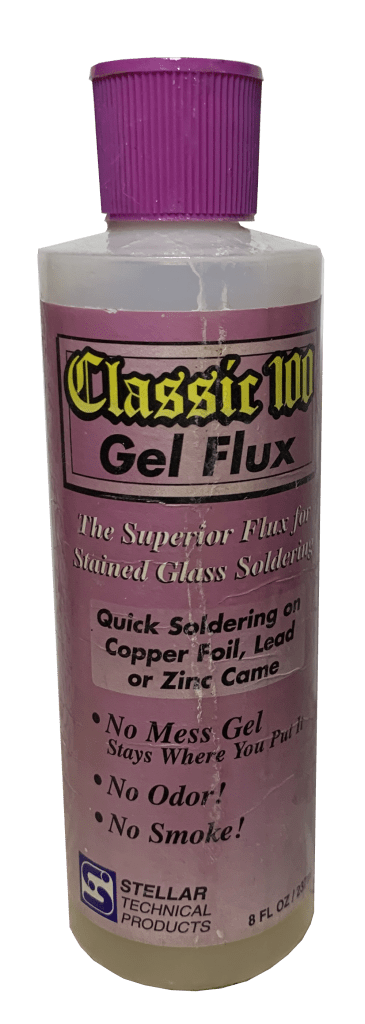
- Gel flux: My personal choice is water soluble gel flux when I work on stained glass. Gel flux can be easily controlled for precise application. Easy to apply with a swab or brush and stays where you put it. Also easy to clean off with soap and water.
- Paste Flux: Paste flux is a thick, paste-like form of flux. It’s often used in plumbing applications and some types of soldering. Paste flux is applied by a brush directly to the joint or the metal surfaces being bonded.
- Flux-Cored Solder: Flux-cored solder wire contains a core of flux. When heated, the solder wire releases the flux to clean and protect the joint. This form is commonly used in electrical and electronics soldering. This form of flux is easy to use since you do not have the added step of applying the flux.
- Powder Flux: Powder flux is a dry, powdered form of flux that is mixed with water to form a paste just before use. It’s used in applications where a controlled, custom mixture of flux is needed. This form of flux is most often used in brazing and welding. Sodium Borate powder flux is sometimes used in ceramic work to manipulate the temperature and affects of glazes.
- Tubular Flux: Tubular flux is used primarily in submerged arc welding (SAW). It’s contained in a hollow wire electrode, and the flux is released as the wire melts during the welding process.
- Gas Flux: In some welding processes, a gaseous flux is used. For example, in flame brazing, a flammable gas mixed with a flux is used to protect the joint from oxidation.
- Self-Fluxing Alloys: Some alloys are designed to be “self-fluxing,” which means they contain elements that act as flux when heated. For example, certain brazing and soldering alloys incorporate a fluxing agent within the alloy itself.
- Flux pen: Designed for controlled application of no-clean flux. Since it is such a precise, controlled application- the remaining reside is very minimal.
- Tacky flux: Often used for electronic hand solder rework- especially of BGA components. This is typically applied with a syringe, but can also be automatically dispensed or applied through a stencil.
The choice of flux form depends on the specific application and the method of application that is most suitable. Liquid and paste fluxes are more commonly used for manual applications, while flux-cored solder and self-fluxing alloys are often used in automated processes. The type of flux should match the materials being joined and the temperature conditions of the application. It’s essential to follow manufacturer recommendations and safety guidelines when using flux in any form.
The choice between water-soluble and no-clean flux depends on your specific application, and whether one is easier to use than the other may vary based on your needs and preferences.
Here are some considerations for both types of flux:
Water-Soluble Flux:
- Ease of Cleaning: Water-soluble flux is designed to be easily cleaned with water. This can be an advantage when a clean, residue-free surface is essential, such as in some electronics manufacturing applications.
- Residue: Water-soluble flux leaves a residue that must be removed. This means you need to plan for a cleaning step after soldering, which can add time and complexity to the process.
- Environmental Considerations: Water-soluble flux is generally considered more environmentally friendly because it can be cleaned with water, and the residues are less harmful than those of some other flux types.
- Application Method: Water-soluble flux is typically used in applications where cleaning with water is feasible and where the presence of residue is not a problem.
No-Clean Flux:
- Convenience: No-clean flux is more convenient for applications where cleaning after soldering is challenging or not desired. This can save time and effort.
- Residue: No-clean flux leaves a minimal residue, which is designed to be safe and non-corrosive. The residue is often left in place because it is not harmful to the circuit or components.
- Electronics Applications: No-clean flux is commonly used in electronics assembly, especially for surface mount devices (SMDs), where cleaning can be difficult due to tight spaces and the potential for damage to sensitive components.
- Temperature Considerations: No-clean flux can be more temperature-resistant and may not require cleaning at all, making it suitable for applications where post-soldering cleaning is impractical due to high operating temperatures.
In terms of ease of use, no-clean flux may be considered more straightforward in situations where cleaning is not feasible or not required. When no-clean flux is required to be cleaned-only a strong chemical will do the job. Water-soluble flux is easier to clean but involves an additional cleaning step, which may add complexity to the process. The choice between the two flux types depends on your specific application requirements and whether ease of cleaning or minimal residue is more critical.
I have personally used fluxes in soldering both in electronics and in stained glass art. I prefer water- soluble flux over no-clean when working with stained glass.
Although I have also used liquid flux for stained glass work, I prefer gel flux. Below is what I have used and recommend: I only include products that I have used myself. As an Amazon Affiliate Marketer, I earn a commission on qualifying purchases at no additional cost to you.
_________________________________________
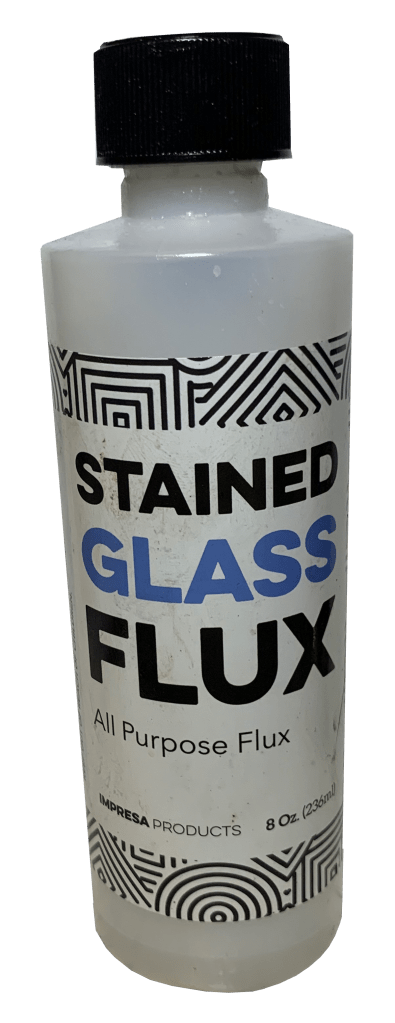
Liquid flux by Impresa Products
___________________________________________
Thank you for your interest in fluxes! Please check out my web page that highlights products used in stained glass works: zodiarts.org
 Zodiarts
Leave a comment